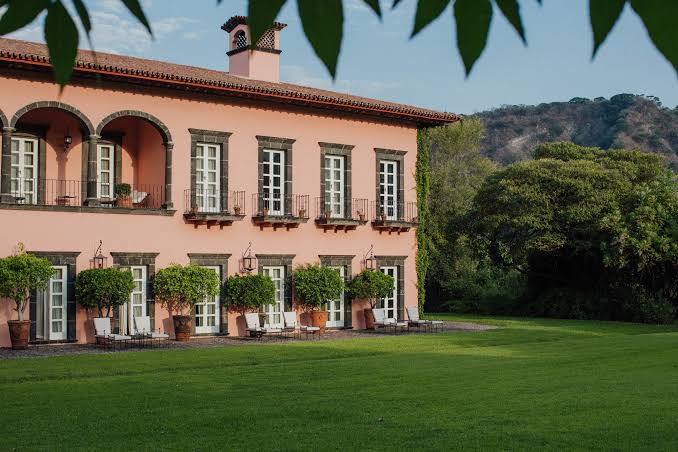
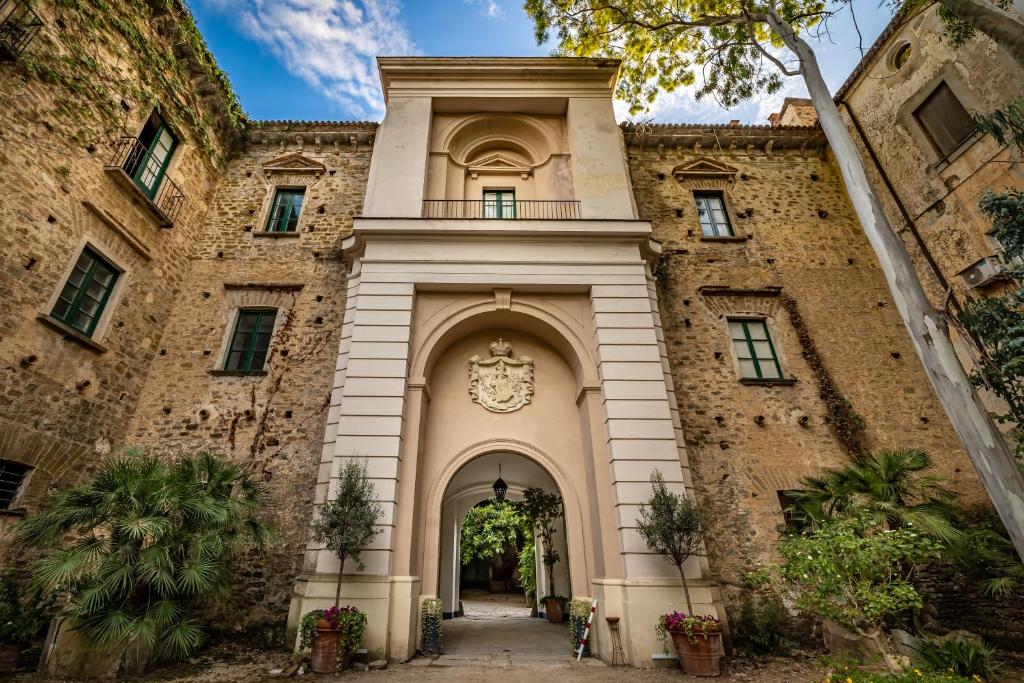
Six hotels where the older thing is worked stone or worked ground: a moat, a cloister, a planted garden, a rampart, an aqueduct, two towers. Somebody made each of them, for a reason that had nothing to do with guests. Landscape that nobody built belongs in the other sections.
Art Hotels, Europe and Mexico.
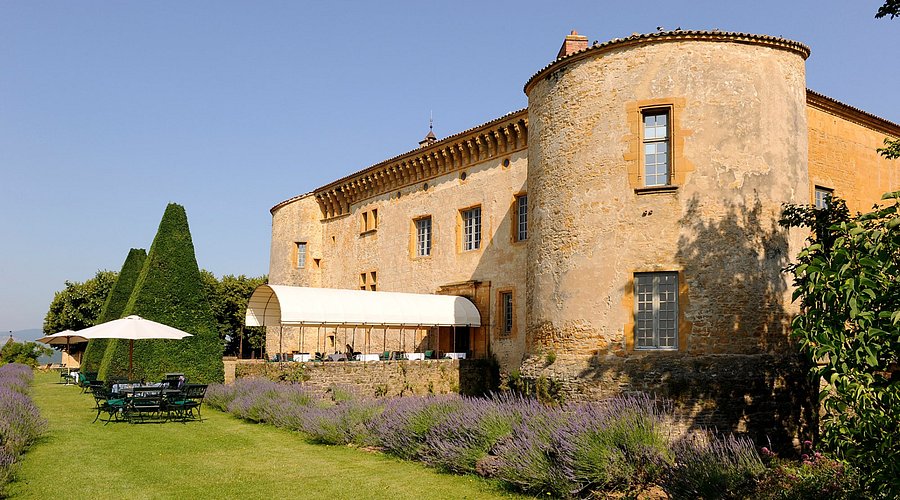
Château de Bagnols
Bagnols, Beaujolais, France
In a few wordsA moat and its walls ring the house, dug for defence long before guests arrived
What is older
Cut for defence, the moat and the curtain walls follow the habit of fortified houses in this part of Beaujolais in medieval times. The ditch is older than every window above it. Stone in the walls has been repaired often, yet the line those walls follow has not moved.
Where it stands
The ditch runs around the house on its own ground, with the walls rising directly from it and a bridge carrying the approach across. Vineyards begin where the outer bank ends. From the courtyard you look outward over the wall rather than down into the water below.
What was built around it
Everything later was placed inside the ring. Rooms, courtyard and terrace all sit within the walled footprint, so the moat sets the limit of the house instead of the other way round. Additions went upward and inward, and never across the ditch.
Château de Bagnols, Bagnols, Beaujolais, France.
Ask to see it
Ask which terraces overlook the moat, since parts of the walk around it are kept closed.
Looked up · February 2027
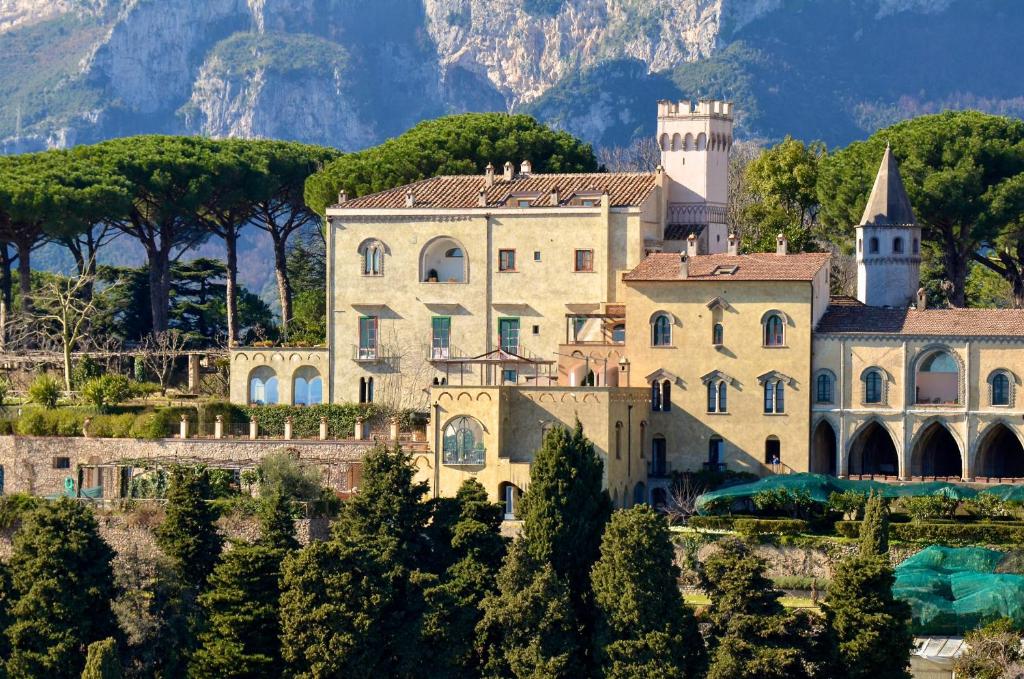
Hotel Villa Cimbrone
Ravello, Italy
In a few wordsA cloister and its terrace sit at the cliff edge above the Amalfi coast
What is older
Belonging to the monastic building tradition of this coast, the cloister is medieval work rather than a later copy of one, and its arcade shows it. The terrace it opens toward follows the cliff. Both were standing, in some form, well before the villa took in guests.
Where it stands
The cloister sits within the grounds, between the house and the long walk out to the cliff terrace. Gardens run along either side of that walk. The drop begins a few paces beyond the parapet, and the sea fills the whole view from the far end.
What was built around it
Restoration worked around the cloister rather than over it, and the arcade still governs how you move from the entrance toward the garden. Later rooms were kept behind it. The walk out to the terrace was left open along the line it already had.
Hotel Villa Cimbrone, Ravello, Italy.
Ask to see it
Ask whether the cloister and the far terrace are open when the gardens are in use for events.
Looked up · February 2027
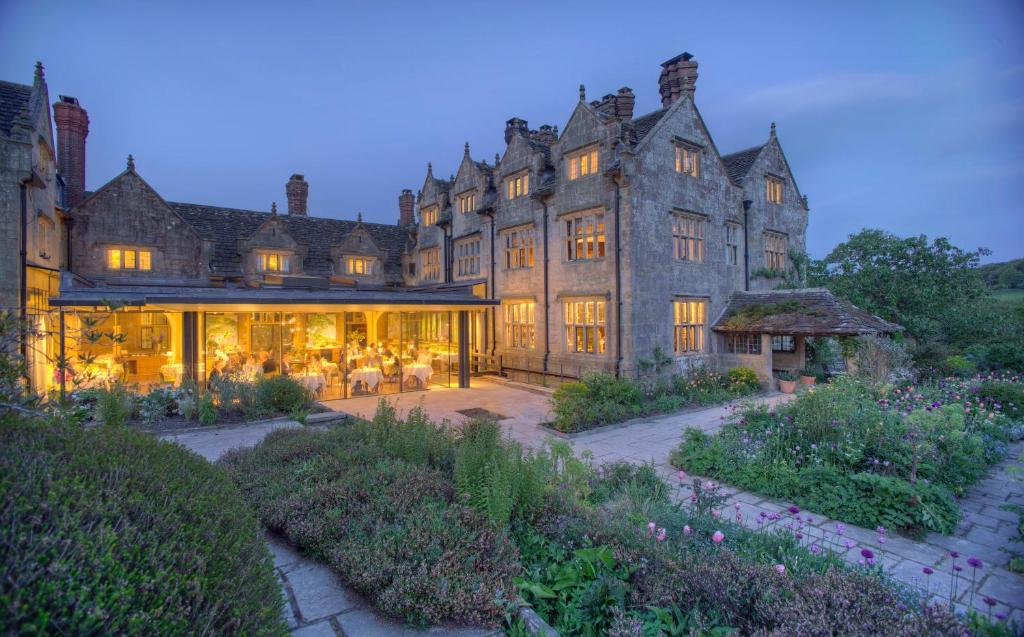
Gravetye Manor
West Hoathly, Sussex, England
In a few wordsA garden laid out by a working gardener still sets the ground around this Sussex house
What is older
Made by a nineteenth century gardener who lived here and wrote about the practice, the garden keeps his planting scheme, his walls and his levels. Later hands have kept the whole thing going season by season. What is on the ground follows a plan older than the hotel.
Where it stands
The garden wraps the house on several sides, running from the flower beds under the windows out to the walled kitchen ground and the meadow past it. Paths link the parts. Guests cross it to reach the door, and the kitchen takes from it daily.
What was built around it
Every later addition has been kept low and close, so the beds are not built over and the levels still read. Terraces step down from the walls into planting. The kitchen sits where the walk in from the garden is shortest, which was the point.
Gravetye Manor, West Hoathly, Sussex, England.
Ask to see it
Ask which parts of the walled garden are being worked on before you plan a slow walk round.
Looked up · January 2027
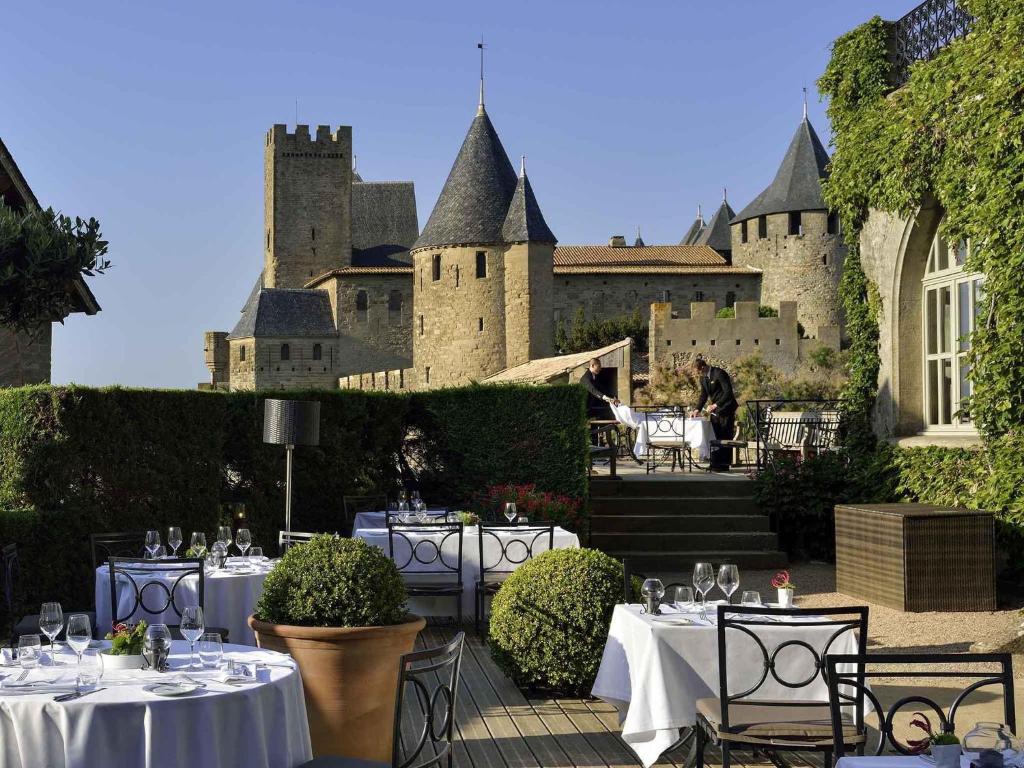
Hôtel de la Cité
Carcassonne, France
In a few wordsA stretch of the walled city stands against the hotel, holding the whole hill together
What is older
Ramparts here were raised, ruined and raised again across medieval centuries, and the stretch beside the hotel belongs to that circuit. Lower courses are older than the upper ones and were laid by different hands. This was defensive work for the town, never a feature attached to a house.
Where it stands
The wall runs along one side of the grounds, inside the fortified town, with the garden and pool set against its inner face. Beyond it the ground falls away toward the outer ring. Ramparts carry on in both directions well past the hotel's own boundary.
What was built around it
The hotel was built up to the wall and stops there, using the stone as one edge of its garden. Windows on that side look along the rampart rather than through it. No opening was cut, so the circuit stays continuous behind the planting.
Hôtel de la Cité, Carcassonne, France.
Ask to see it
Ask whether the rampart walk beside the garden is open, as sections close for stonework.
Looked up · January 2027
Hacienda de San Antonio
Comala, Colima, Mexico
In a few wordsAn aqueduct crosses the estate on stone arches, carrying water the estate was built around
What is older
Water came first. The aqueduct was built to bring it down from the slopes of the volcano for fields and mills, and its arches were laid as engineering rather than ornament. They were carrying water across this ground long before the estate began taking in guests.
Where it stands
The arches run across open ground below the house, cutting through pasture and cane on their way toward the mill. Coffee and volcano fill the view behind them. Part of the line is close enough to walk to, and the rest crosses land that is still farmed.
What was built around it
Courtyards and rooms were placed where the water arrived, so the line of the aqueduct explains the position of almost everything else. Gardens were laid out along it. Later building kept clear of the arches rather than leaning anything against them.
Hacienda de San Antonio, Comala, Colima, Mexico.
Ask to see it
Ask which section of the aqueduct can be reached on foot, since much of it crosses working farmland.
Looked up · December 2026
Palácio Belmonte
Lisbon, Portugal
In a few wordsTwo towers of Roman and Moorish stone stand inside the walls of this Lisbon house
What is older
Roman work sits at the base and Moorish courses run above it, and the two towers were part of the town's defences before any palace made use of them. Masons of later centuries built onto that stone rather than replacing it. The lower courses remain the oldest thing here.
Where it stands
The towers stand at the edge of the property, joined to the castle wall that runs on behind the building. Lisbon drops away below them on the river side. From the terraces you follow the same stone as it continues into the castle grounds above.
What was built around it
The palace grew against the towers and took them into its plan, so corridors end at old masonry and rooms borrow the thickness of those walls. Nothing was pulled down to square the shape. The towers still carry weight instead of standing as decoration.
Palácio Belmonte, Lisbon, Portugal.
Ask to see it
Ask which rooms and terraces sit against the old stone, as the towers are not all reachable.
Looked up · December 2026
The older thing at each hotel is described from published material and set down in our own words. No age here is a measurement, nothing on this page is a promise of access, and the month under an entry is when that material was last opened.