Four capsule hotels in Japan. None of them has a garden or a wall of its own, so the older thing sits beside the building rather than on its ground: a temple yard, a dug canal, a trading street, a shrine tree. Places with grounds of their own are described in the other sections instead.
Capsule Hotels, Japan.
Capsule Ryokan Kyoto
Kyoto, Japan
In a few wordsA capsule floor in Kyoto, with a temple yard and old timber houses for neighbours
What is older
The temple yard next door is older than the capsule floor by a long stretch, and so is the run of timber houses along the lane. Kyoto kept blocks of this kind through fire and rebuilding, and the yard has been a yard for as long as the neighbourhood can account for.
Where it stands
Nothing here belongs to the hotel. The yard sits beyond the entrance, on ground the temple keeps, and the timber houses stand shoulder to shoulder along the same narrow street. Guests walk past both on the way in, and that is the whole of the relationship between them.
What was built around it
The building holds its capsule floor above street level and does not spread sideways. There is no garden, no wall and no forecourt, so the older ground next door stays exactly as it was, with a doorway and a few paces between the two.
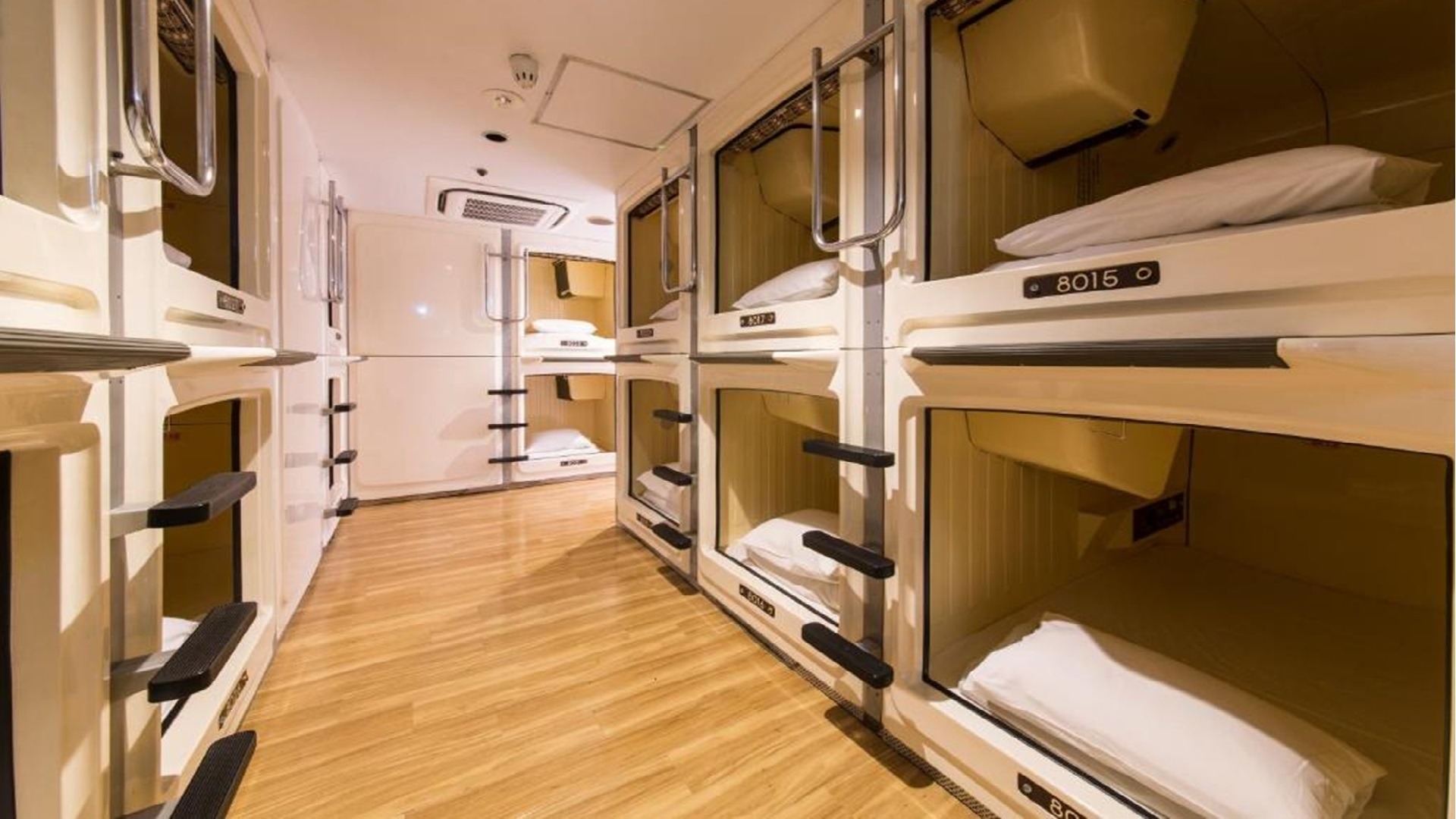
Capsule Ryokan Kyoto, Kyoto, Japan.
Ask to see it
Ask at the desk which parts of the temple yard are open to visitors, and when.
Looked up · March 2027
Len Kyoto Kawaramachi
Kyoto, Japan
In a few wordsA narrow canal runs past the door, cut for boats long before this house existed
What is older
Dug as a working waterway, the Takase canal moved goods through the city when water was the cheapest road into it. Little travels on it now. The channel, its stone edges and the line it draws through the district all come from that earlier and entirely practical purpose.
Where it stands
The canal runs in the street outside, a step or two from the entrance, and it belongs to the city rather than to the hotel. Willows and low walls follow it in both directions. Guests cross it by a small bridge whenever they leave the building on foot.
What was built around it
Rooms and a ground floor open toward the water, and the frontage follows the line of the channel instead of squaring off against it. Nothing was cut back to make room. The house simply took the shape the canal had already set for the plot.
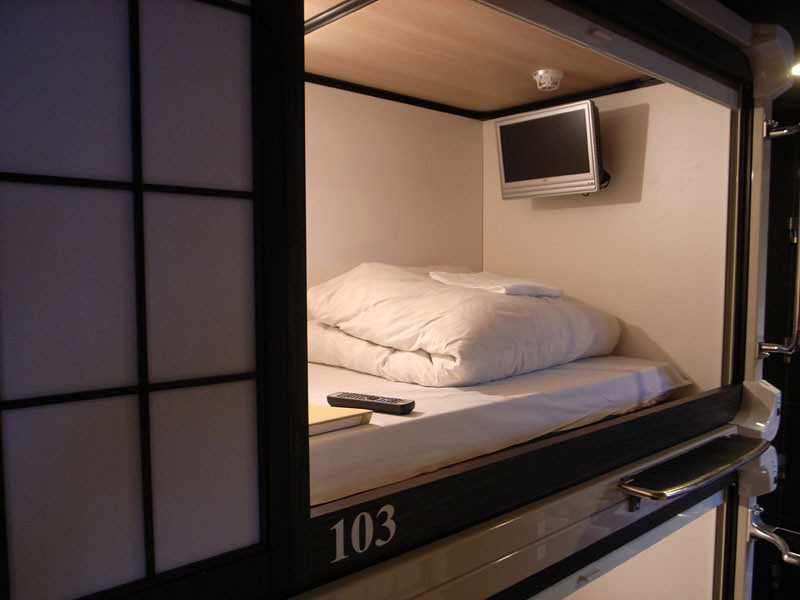
Len Kyoto Kawaramachi, Kyoto, Japan.
Ask to see it
Ask which side of the building looks onto the water if you want the canal in view.
Looked up · March 2027
Piece Hostel Sanjo
Kyoto, Japan
In a few wordsA trading street of the Sanjo quarter, in business for centuries, passes the front door
What is older
Sanjo was a merchant street before it was anything else, one of the routes that carried traffic east and west across the city. Shopfronts have changed hands many times over. The width of the street, its arcade habit and its trade have all outlasted the businesses along it.
Where it stands
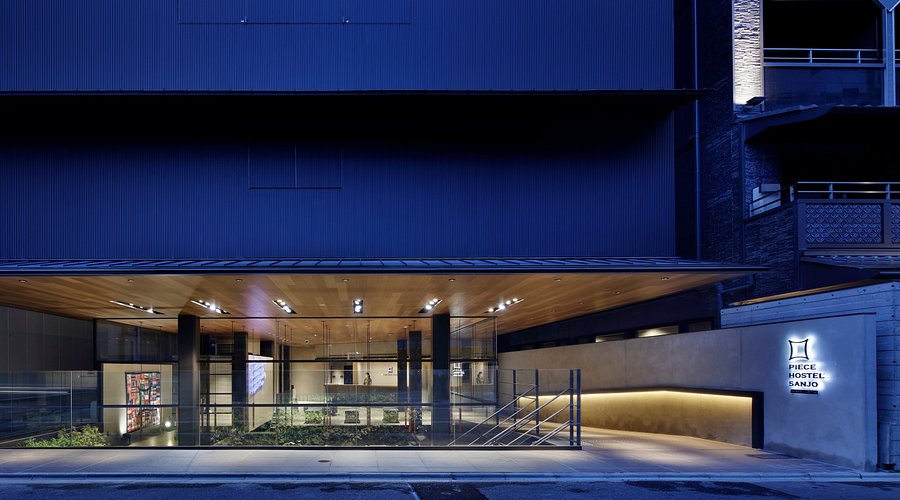
The street is public ground, immediately outside, and it continues for several blocks in both directions. The hotel occupies one address along it, without a yard or a setback. What is older lies underfoot and to either side, rather than behind any gate of its own.
What was built around it
The building meets the pavement flat, with its ground floor at street level and openings facing the shopfronts opposite. Sleeping floors sit above. Nothing was built around the street, because the street was there first and the plot had to fit what it left.
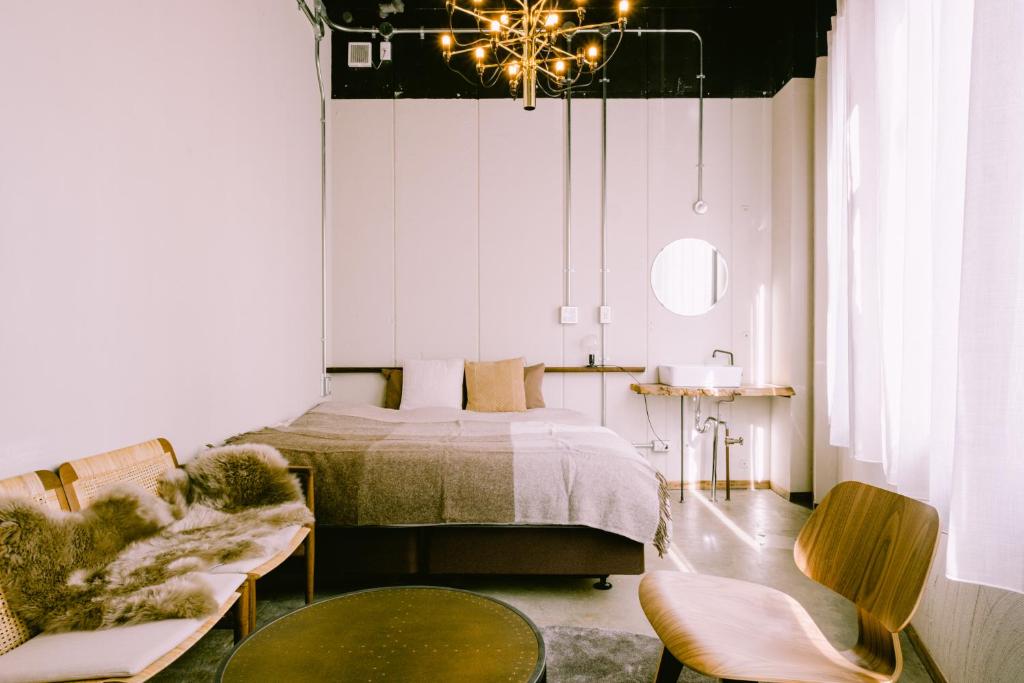
Piece Hostel Sanjo, Kyoto, Japan.
Ask to see it
Ask staff which neighbouring shops keep early hours if you plan to walk the street before breakfast.
Looked up · April 2027
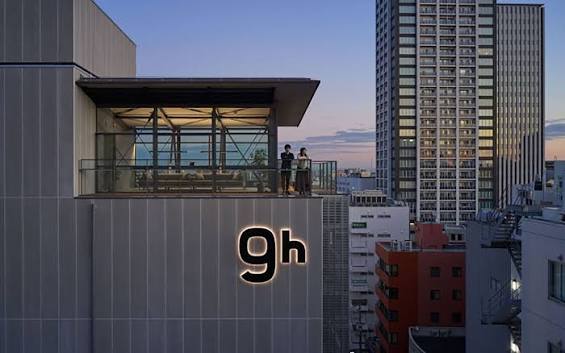
nine hours Nagoya Station
Nagoya, Japan
In a few wordsA ginkgo in the shrine yard nearby is the oldest living thing on this street
What is older
Ginkgo trees are long lived, and the one in the shrine yard has the girth of a tree left alone for generations. No one has dated it. What is clear is that shrine ground of this kind was planted and tended well before the station district took its present shape.
Where it stands
The tree stands in the shrine's own yard, a short walk away, on ground the shrine keeps and manages. This is a branch of a chain with its own separate address near Nagoya Station, so none of that yard, and none of the tree, belongs to the hotel.
What was built around it
The hotel is a capsule floor plan fitted inside a city block, with no garden and no boundary of its own to speak of. The tree was never a factor in how the place was arranged, and it goes on standing a few streets away.
nine hours Nagoya Station, Nagoya, Japan.
Ask to see it
Ask at reception for the walking route, and check whether the shrine yard is open when you arrive.
Looked up · April 2027
The older thing at each hotel is described from published material and set down in our own words. No age here is a measurement, nothing on this page is a promise of access, and the month under an entry is when that material was last opened.